ARK.
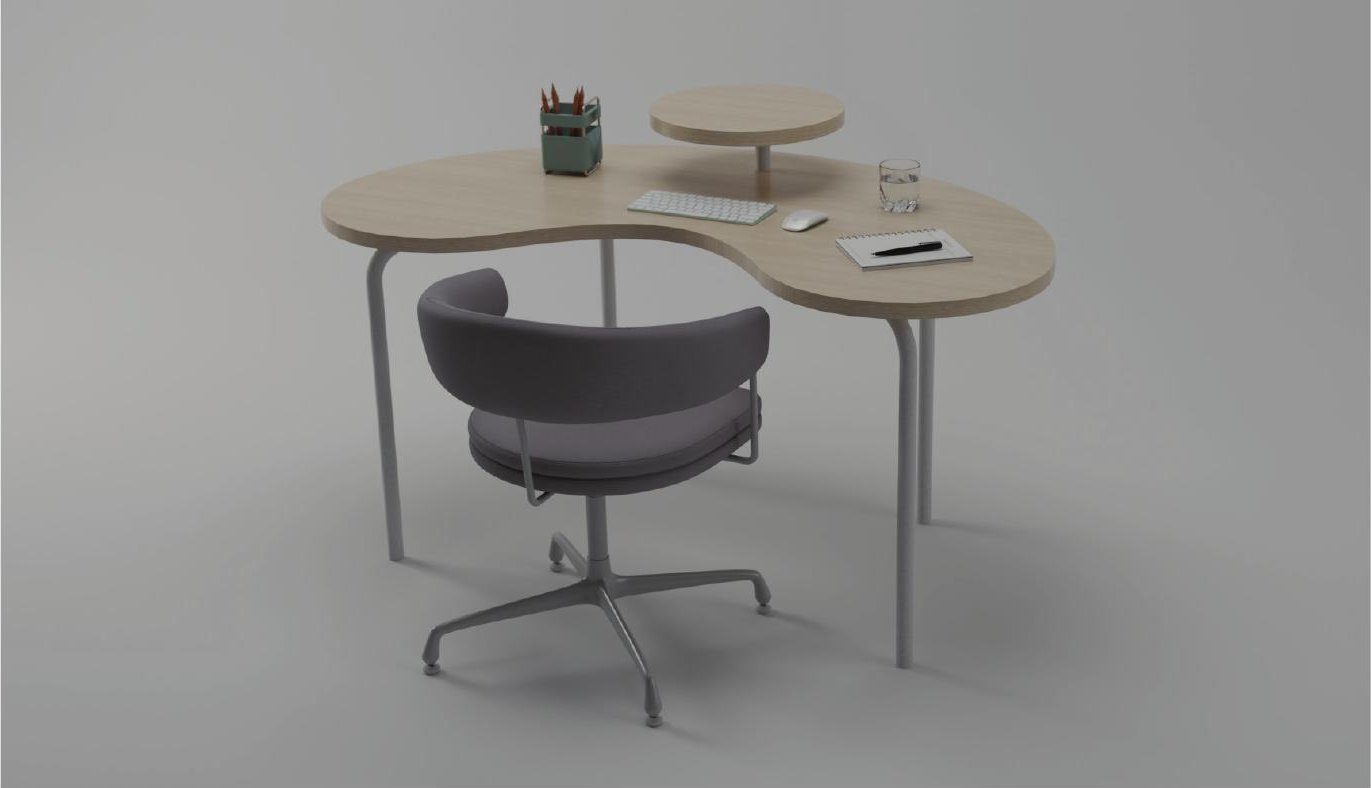
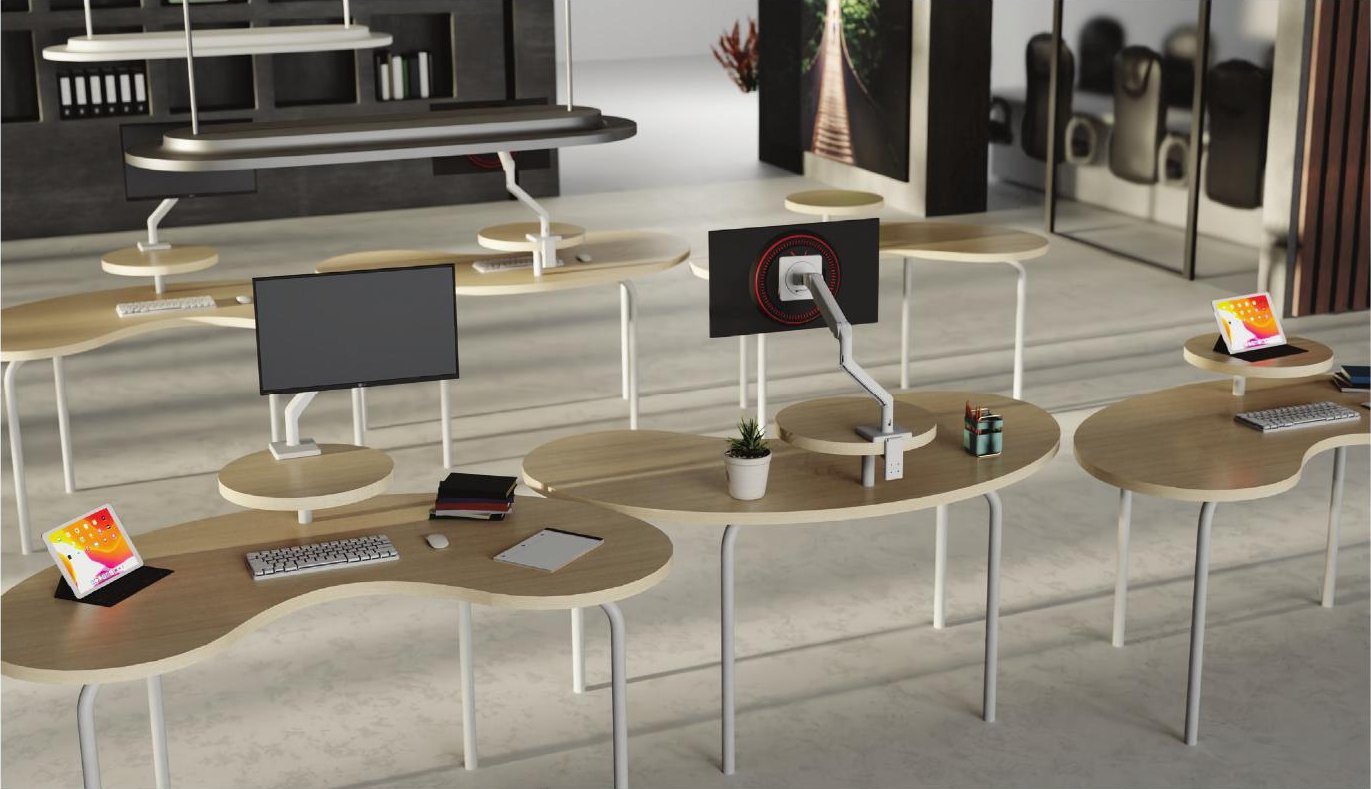
A desk designed for efficient mass production while offering a thoughtful balance of physical and emotional affordances, the practical things you reach for, and the small ones that make a workspace feel like yours.
The project began with an ethnographic study of my own workspace, tracking daily interactions with physical and emotional desk elements across a full week. Laptops, keyboards and mice were the obvious productivity tools. But personal objects (the ones that quietly enhance focus and motivation) were just as important, and just as often excluded from the surface to avoid clutter. That trade-off felt wrong.
The brief
Design a desk that supports productivity, focus and comfort in both home and office settings, while making room for the emotional cargo people actually carry into a workspace. Segmented zones to reduce clutter and separate tasks. Modular, adaptive elements to suit different workflows. Subtle places for personal or sensory items. Ergonomic considerations for long-term physical support.
Refining the form
Three components needed the most work between the first concept and the manufacturable version: the legs, the laptop stand, and the privacy screen.
Legs
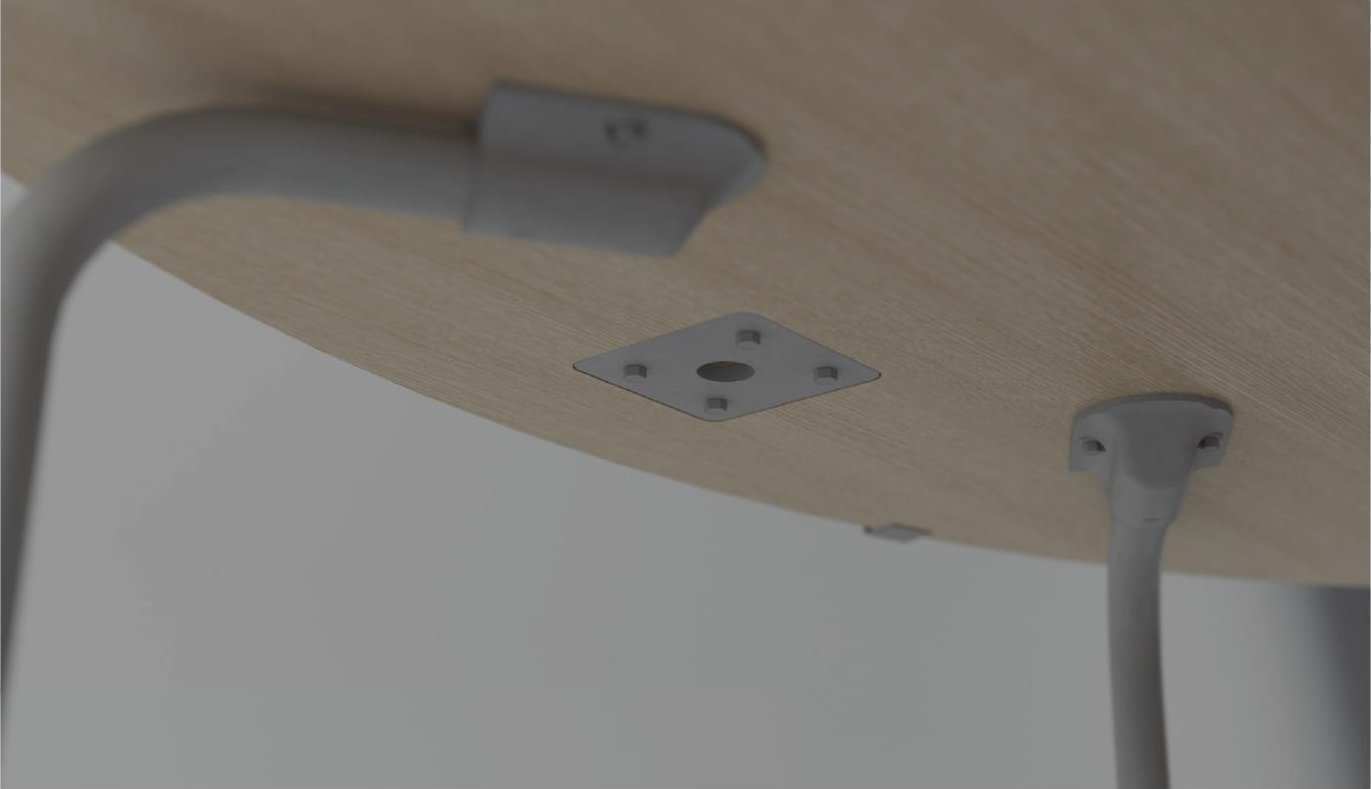
The original X-frame layout was visually clean but structurally compromised. It required welding at assembly and made flat- packing painful. After consulting with my workshop technician, I moved to an aesthetic bracket system. Each leg attaches to the underside of the tabletop with a die-cast steel bracket and a hex flange bolt. Quick to assemble, simple to ship.
Laptop stand
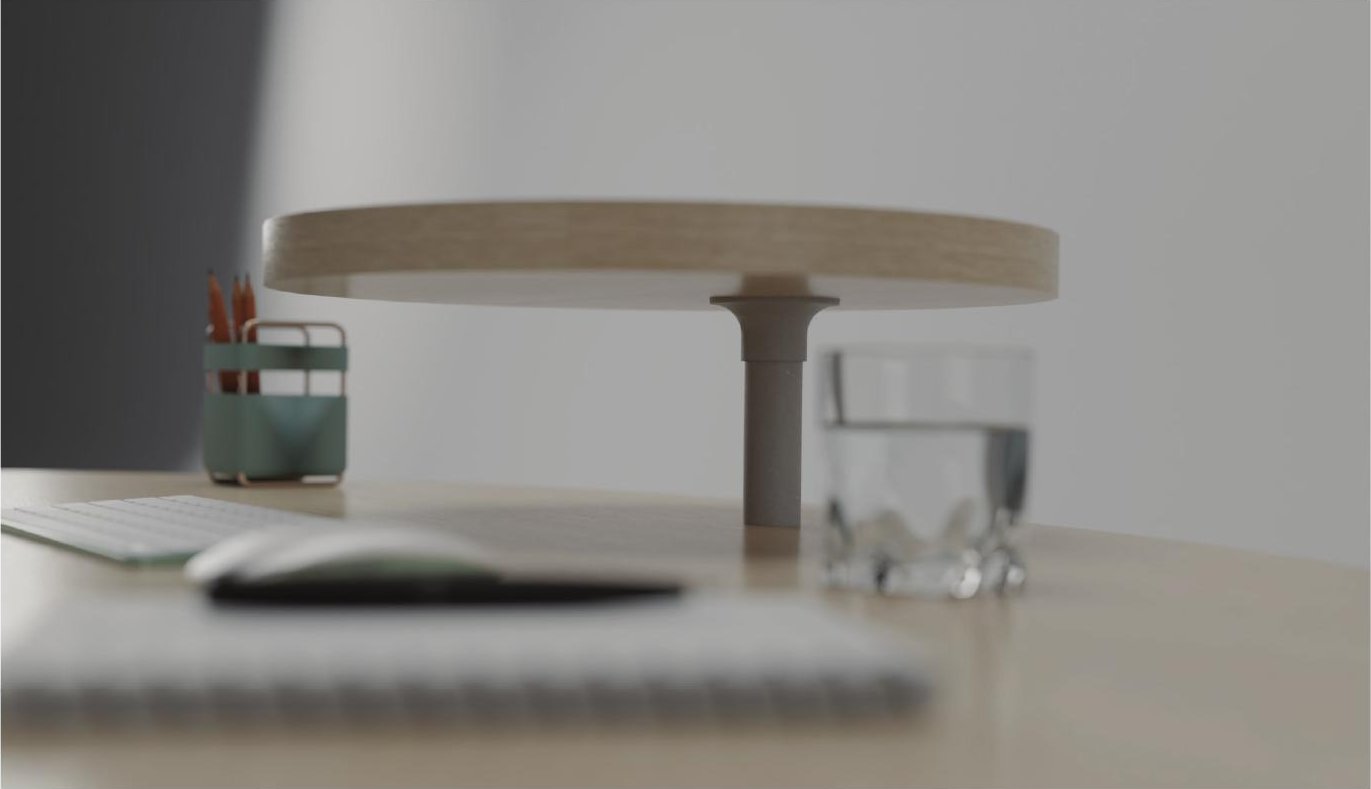
The raised platform needed enough structural integrity to hold a laptop or a clamped monitor arm. I redesigned it around a die-cast steel support column with reinforcing plates above and below the tabletop, and moved the column toward the centre so a Humanscale monitor arm could clamp on cleanly without fouling the privacy screen.
Privacy screen
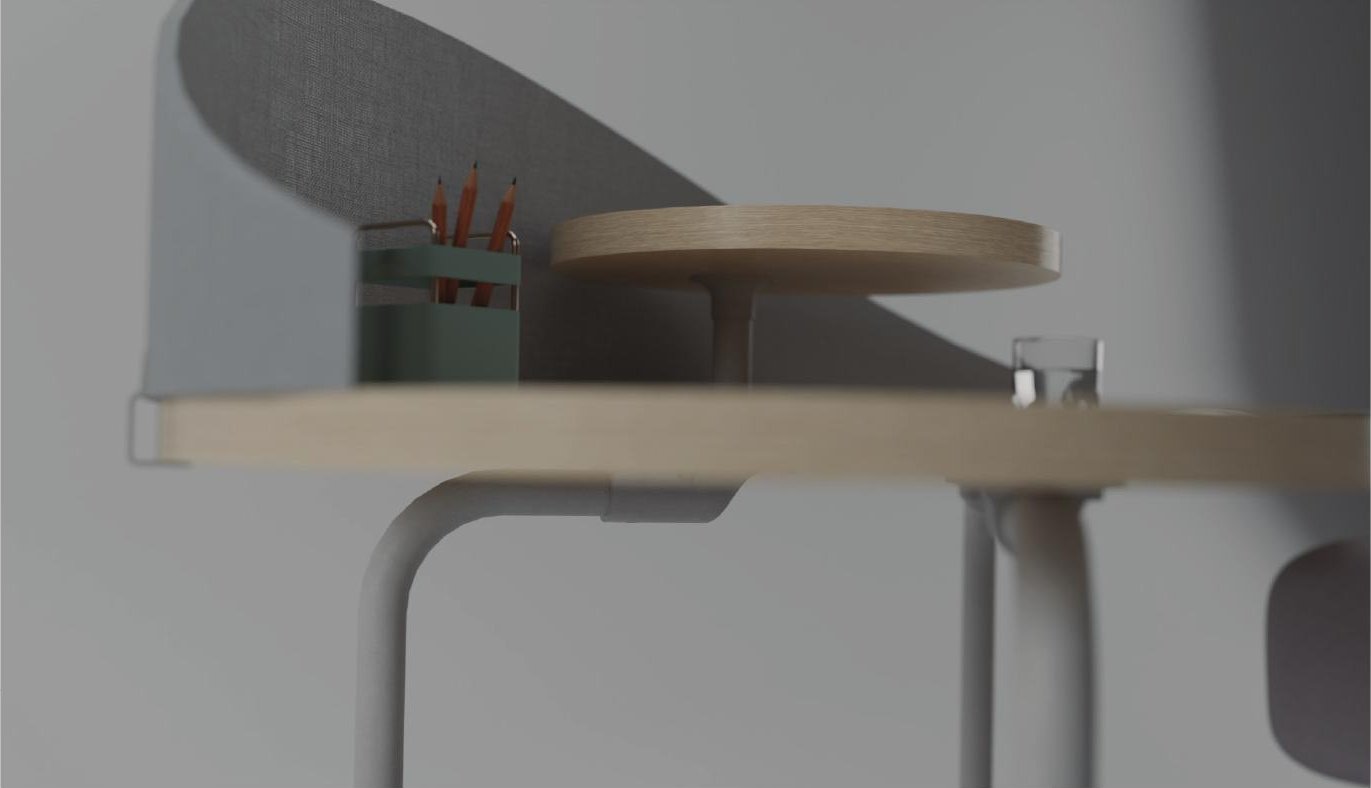
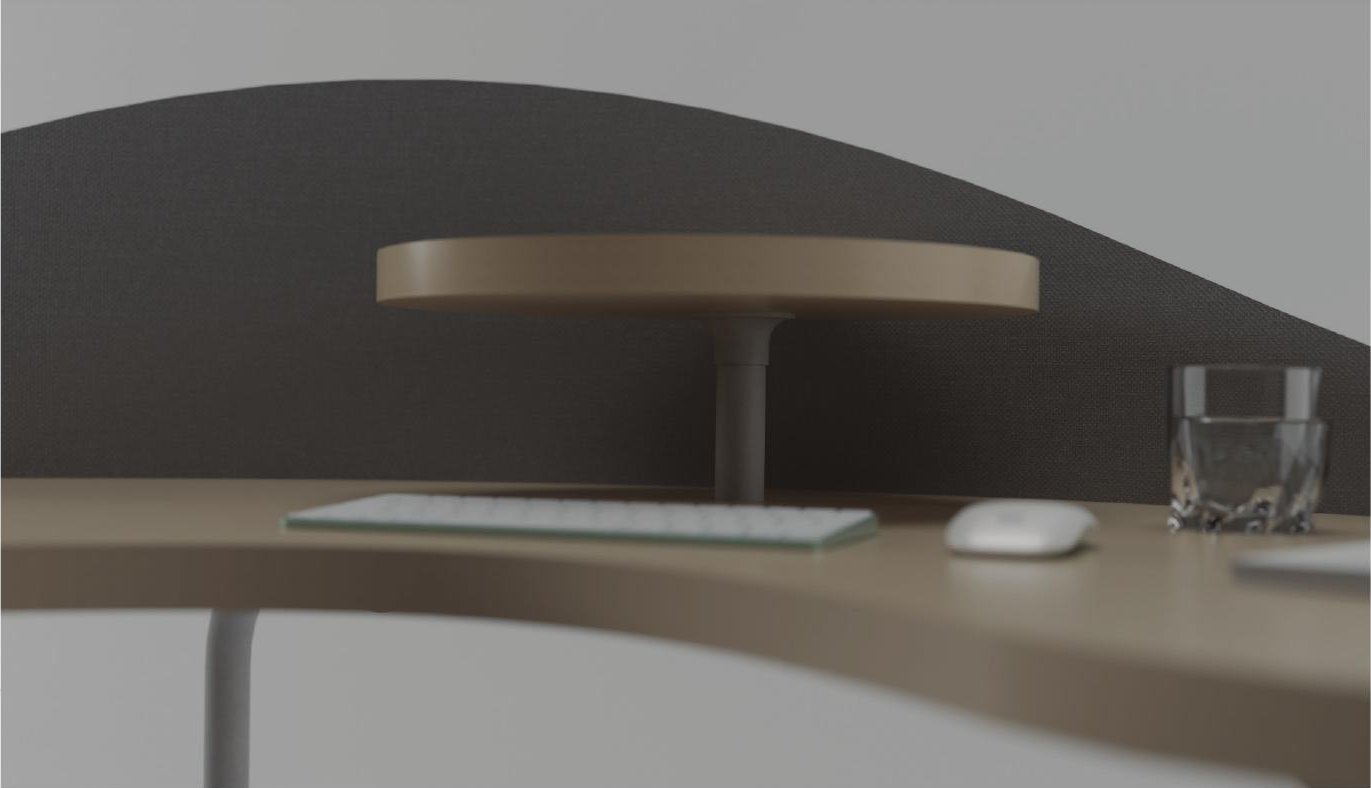
Added after Assignment 2 feedback. I sketched five forms before settling on the asymmetric arc that rises from the widest part of the desk and tapers toward the worker. Made from 10mm Echopanel in a warm grey, picked for its workability, acoustic dampening, sustainability and durability, and chosen to complement rather than compete with the oak.
Materials and manufacture
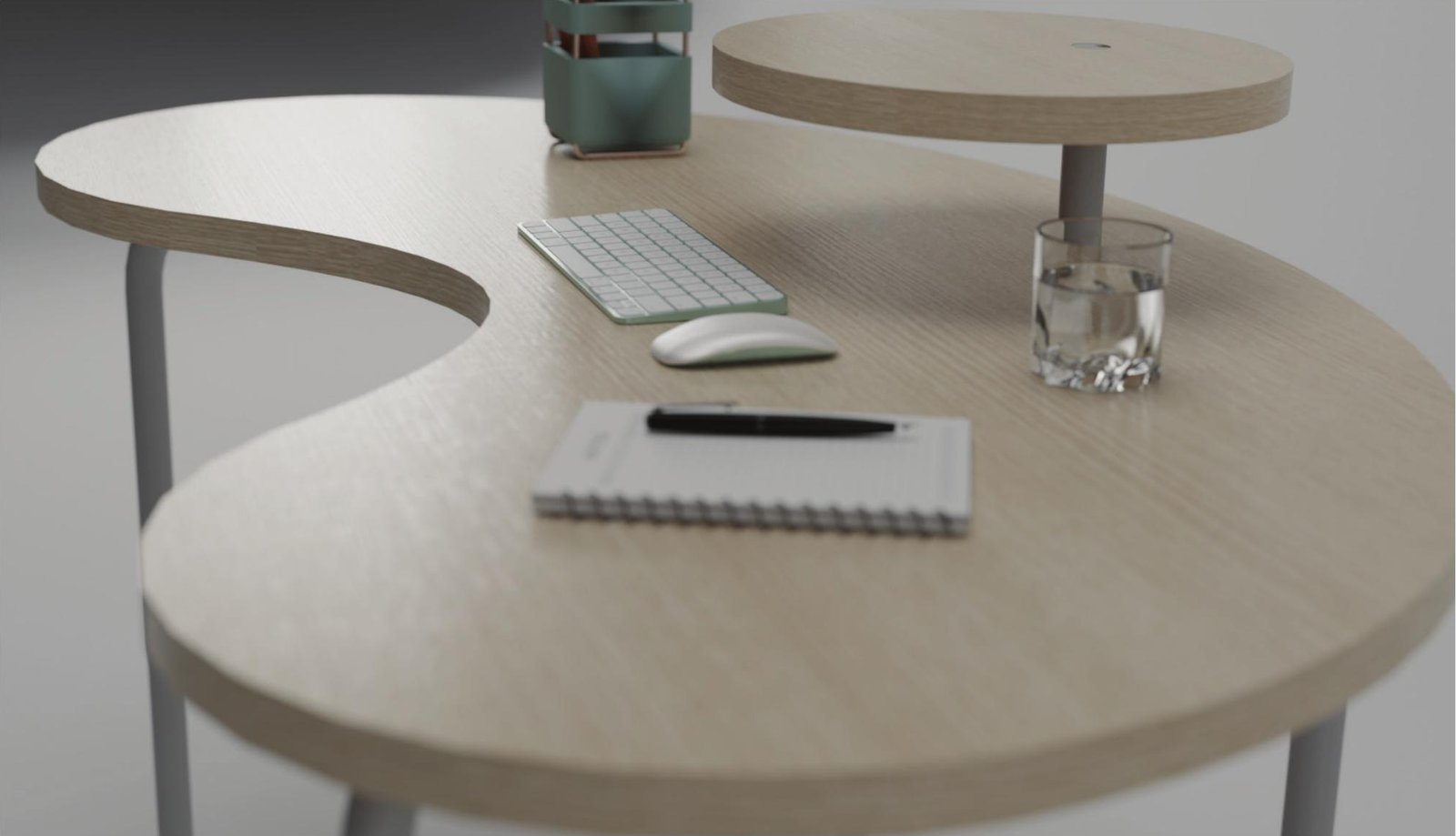
The surface is 30mm CNC-routed plywood with a cold-press oak veneer — warm and approachable, durable, and efficient at scale. Legs are 32mm OD powder-coated steel with a 64mm bend radius. Hardware is reduced to twelve 10mm hex flange bolts and four grub screws. The whole desk flat-packs.
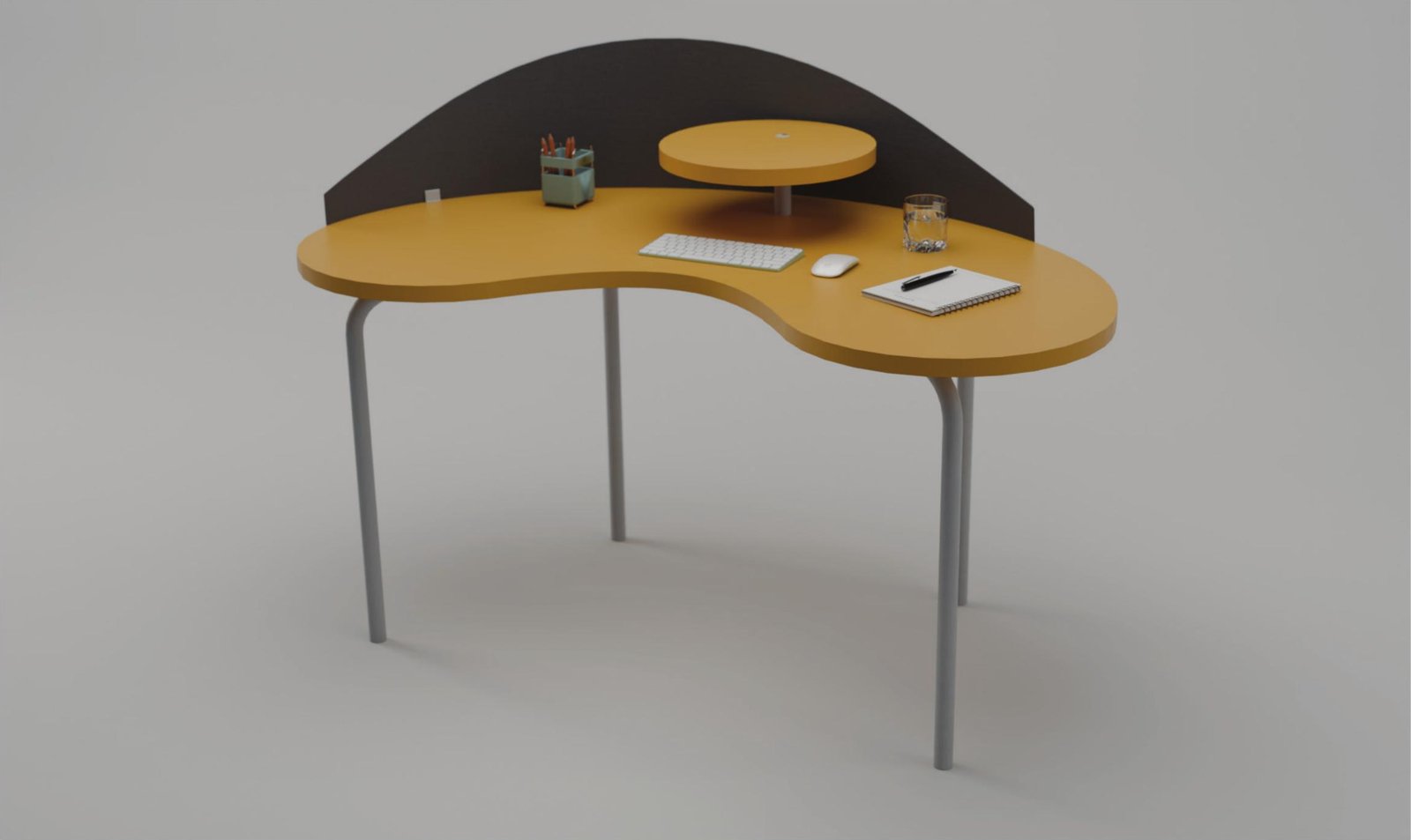
Plywood as a base also opens up customisation. The colour palette below pairs laminate finishes against complementing Echopanel screens, the same desk, dialled to different settings.